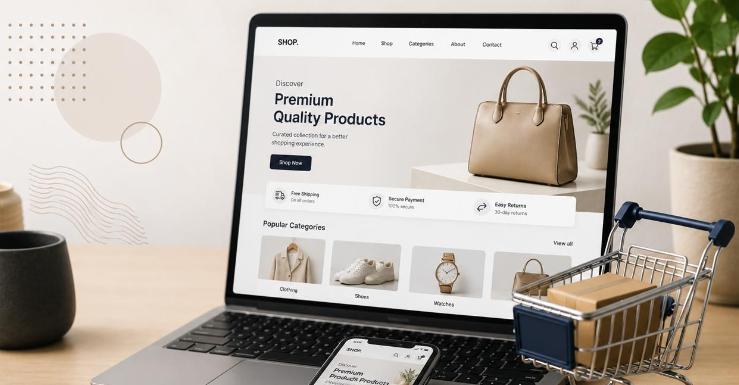
Professional e-commerce store design - ORKADA
E-commerce Solutions by ORKADA

Professional E-commerce Store Design to Manage Products and Grow Your Business

At ORKADA, we provide e-commerce store design and setup services tailored to the nature of your business and its requirements. We organize products and categories, design store pages, and configure order, payment, and shipping settings.

WordPress WooCommerce Salla Zid Rakaz
Store Interface Design Organized interface reflecting your brand identity
Product Setup Organizing products and categories
Sales Process Setup Configuring orders, payment, and shipping
Search Engine Readiness Optimizing page structure and content
E-commerce Platforms

E-commerce Store Design Platforms We Rely On

We provide e-commerce store design and setup services using a range of platforms that meet the needs of various commercial activities. We determine the appropriate platform based on the nature of products, store size, management and customization requirements, and features needed to run sales operations.

WordPress & WooCommerce

Flexible solution for customizable stores

We rely on WordPress to manage website content and use the WooCommerce plugin to add e-commerce functions. This solution allows building a store that is customizable in terms of design, pages, and product display, benefiting from available plugins and integrations.

Setup Includes:

  • ✓ Configuring WooCommerce and its settings
  • ✓ Designing the store interface and pages
  • ✓ Products, categories, and variations
  • ✓ Cart and checkout
  • ✓ Setting up payment and shipping methods
  • ✓ Inventory, taxes, and currencies
  • ✓ Customer accounts and integrations
  • ✓ Search engine optimization readiness

Salla Stores

Store setup via Salla platform

We create and set up Salla stores to match the brand identity, organizing categories and products, customizing the store appearance, and configuring available sales, shipping, and payment options according to platform features and plans used.

Setup Includes:

  • ✓ Creating the store and basic settings
  • ✓ Customizing the store design
  • ✓ Organizing sections and categories
  • ✓ Adding products and images
  • ✓ Setting up product options
  • ✓ Configuring supported payment and shipping
  • ✓ Preparing store pages and policies
  • ✓ Optimizing available SEO elements

Zid Stores

Store setup and sales operations organization

We provide Zid store setup and design services, focusing on organizing the store interface, products, categories, and display pages, and configuring order, payment, shipping, apps, and integrations settings according to available options on the platform.

Setup Includes:

  • ✓ Setting up the store and interface
  • ✓ Organizing products and categories
  • ✓ Setting up product options
  • ✓ Configuring payment and shipping
  • ✓ Arranging store pages
  • ✓ Reviewing the order and purchase experience
  • ✓ Reviewing apps and integrations
  • ✓ Optimizing available SEO elements

Rakaz Stores

Store setup according to platform features

We provide store setup services via Rakaz, focusing on the interface, visual identity, organizing products, categories, and store pages, and reviewing order, payment, and shipping settings according to the capabilities and features available on the platform.

Setup Includes:

  • ✓ Setting up the store and basic data
  • ✓ Formatting the interface and identity
  • ✓ Organizing products and categories
  • ✓ Setting up available product options
  • ✓ Reviewing order settings
  • ✓ Configuring available payment and shipping
  • ✓ Preparing essential pages
  • ✓ Reviewing browsing and purchase experience

Important Note: WordPress is a content management system for websites, while WooCommerce is a plugin that transforms the website into an e-commerce store and provides product, cart, and order functions. Therefore, the two are not separate store platforms; they work together within a single customizable solution.

How Do We Determine the Right Platform for Your E-commerce Store?

Platform selection is not based on popularity alone, but on project requirements, store management method, and features needed by the business.

✓ Number of products and catalog size
✓ Required level of customization
✓ Inventory and order management
✓ Payment, shipping, and integration options
✓ Ease of daily store management
✓ Operational budget and expansion needs

Do you have an e-commerce store project and need to determine the right platform and prepare execution requirements?

Discuss Platform Selection With ORKADA
Store Interface & Shopping Experience

Designing E-commerce Interfaces That Facilitate the Shopping Experience

In e-commerce store design, we rely on organizing the interface, the way products are displayed, and facilitating visitor navigation between store sections. We build a clear shopping experience that starts from the homepage, through browsing products and viewing their details, reaching the shopping cart and completing the order.

Digital workspace for e-commerce interface design and development
Organized store interface and responsive user experience

An Interface That Reflects Your Brand Identity and Showcases Your Products

The store experience begins with the first impression presented by the homepage, so we pay attention to coordinating colors, fonts, images, and visual elements in line with the visual identity of the business.

We arrange navigation menus, categories, and product cards in a way that helps the visitor reach what they need, with detailed pages that display product information, images, and options clearly.

We also consider organizing the shopping cart and checkout steps, and providing a responsive design compatible with computer, tablet, and mobile screens.

✓

The goal is to build a store that combines clear visual identity, ease of product browsing, and organized purchase steps from the beginning of the visit until the order is submitted.

Essential Elements in Store Interface Design

We organize every part of the store to play a clear role within the shopping experience.

Homepage

Organizing the main interface and displaying sections, introductory elements, and featured products to reflect the business nature.

Navigation Menus & Categories

Arranging menus, sections, and product categorization to facilitate access to various categories and products.

Product Display Cards

Formatting product images, names, essential information, and how they are displayed within category pages.

Product Detail Pages

Organizing product images, description, specifications, options, and details to help the visitor understand the product.

Shopping Cart

Displaying selected products, quantities, and order-related data in an organized and clear manner.

Checkout

Arranging customer data fields, delivery address, and available payment and shipping options within the order steps.

Principles We Follow in the Shopping Experience

01
Information clarity and product display method
02
Ease of navigation between sections and pages
03
Design consistency across different screen sizes
04
Organizing purchase steps and completing the order
Product Setup & Store Management

Setting Up Products, Categories & E-commerce Store Management

Building an e-commerce store isn't limited to interface design; it requires preparing a clear structure for sections and products, configuring essential data for each product, and organizing management tools that help track inventory, orders, and update store content. ORKADA prepares these elements according to the business nature, product volume, and sales management method.

Organizing Products from the Start Helps Achieve Clearer Management

We start by defining main and sub-categories, then distributing products into appropriate classifications, considering the nature of products and their relationships. This organization helps build a clear catalog that is easy to update and add new products to in the future.

We also focus on preparing product data, including names, descriptions, images, specifications, and available options, while configuring the information visitors need before making a purchase decision.

Setup includes preparing inventory management, order tools, and informational pages, according to the platform features used and the agreed scope of work.

What Do We Prepare Inside the Store?

✓ Structure of main and sub-categories and classifications.
✓ Product data, images, descriptions, and specifications.
✓ Product options, variations, and quantities.
✓ Inventory settings and order tracking.
✓ Informational pages and essential store policies.

Store Setup & Product Management Components

Organized settings covering the essential aspects of the catalog and daily store operations.

Category & Product Classification

Creating main and sub-categories, distributing products into appropriate classifications, and organizing the catalog structure in line with the business nature and product variety.

Product Data Entry

Adding product names, descriptions, specifications, and essential data, while standardizing the way information is presented within product pages.

Product Images & Files

Uploading available images and organizing them within product pages, ensuring image clarity, display consistency, and providing product-related files when needed.

Product Options & Variations

Setting up available options such as sizes, colors, types, and weights, and linking them to the product according to platform capabilities and each product's nature.

Inventory & Orders

Setting quantity data and availability statuses, and reviewing order management settings in line with the operating mechanism and available platform features.

Informational Pages & Policies

Preparing About Us, Contact Us, FAQ pages, and shipping, exchange, return, privacy, and terms pages according to approved business information.

Stages of Product Setup Within the Store

01

Business Data Review

Identifying product types, categories, data, and available files for setup.

02

Building Categories

Organizing main and sub-categories and determining the product distribution method.

03

Adding Products

Entering data, images, specifications, and options according to product nature.

04

Settings Review

Checking product organization, pages, and management tools before store delivery.

The number of products included in setup, data entry level, and image formatting are determined according to store size, available files, and agreed scope of work.

Do you need to set up a complete product catalog and organize your e-commerce store management?

Discuss Store Requirements
Payment, Shipping & Integrations

Setting Up Payment & Shipping Methods and Connecting Store Services

We configure payment, shipping, and delivery settings according to the business nature and order fulfillment mechanism, reviewing available service options on the platform and connecting supporting tools the store needs to receive and track orders.

Payment Methods Setting available payment options for customers
Shipping & Delivery Organizing delivery options and service areas
Integrations & Notifications Connecting supporting services and tracking orders

Preparing the Order Cycle from Purchase to Delivery

We set up payment options suitable for the store, reviewing available electronic payment methods through the platform or service providers, and configuring required settings to display them during checkout.

We also prepare shipping and delivery options, including delivery methods, service areas, shipping fees, and related data, according to the business agreement with shipping companies and options supported by the platform.

The work includes reviewing order notifications and external integrations that help organize operations, such as analytics tools, order management services, and supporting apps, according to project requirements.

Store Setup & Operation Services

We review the essential operational aspects and prepare them according to the platform and available services.

Electronic Payment Methods Setup

Configuring payment methods supported by the store and service provider, reviewing their settings and how they appear to the customer during order placement.

Shipping & Delivery Setup

Setting up shipping methods, delivery areas, and related fees, according to business agreements with delivery companies and platform options.

Taxes & Currencies Setup

Reviewing currency and tax settings, calculation methods, and display according to the business nature and approved data.

Order Notifications

Reviewing order notifications, updating statuses, and available alerts for customers and store management according to platform features.

Services & Apps Integration

Setting up required integrations with external services and supporting apps, according to technical compatibility and available permissions.

Analytics & Tracking Tools Integration

Setting up tools for measuring visits, events, and tracking store performance, according to platform capabilities and measurement requirements.

Payment, Shipping & Integration Setup Requirements

1 Providing payment and shipping provider accounts when integration is needed.
2 Defining delivery areas, fees, and shipping and return policies.
3 Providing integration data and permissions required for external integrations.
4 Reviewing currency and tax settings according to business requirements.
Available payment, shipping, and integration methods vary according to the platform, plan, and service providers. Activating some services may require independent accounts, subscriptions, or approvals from the providing entities, and the setup service does not include those service fees unless otherwise agreed.

Define the payment, shipping, and integration requirements appropriate for your store's nature.

Discuss Integration Requirements
E-commerce SEO

E-commerce Store Optimization for Search Engines & Improving Product Visibility

We improve the store's internal structure, product pages, and categories, and organize data that helps search engines understand page content. The service includes technical and editorial aspects related to store optimization, with indexing monitoring and performance measurement using appropriate analytics tools.

Store Performance Tracking SEO Analysis
Store Pages Products
Internal Structure Categories
Structured Data Schema
Indexing Monitoring GSC

Optimizing Store Pages to Be Understood by Search Engines

SEO requirements in e-commerce stores differ from informational websites, given the multiplicity of products, categories, and pages that need proper organization and internal linking.

We focus on setting page titles and meta descriptions, optimizing product and category content, reviewing internal links, images, and structured data, while considering the nature of products and related keywords.

We also review technical aspects related to indexing, Sitemap files, and URL structure, and use Google Search Console to monitor page visibility and discover issues that need addressing.

SEO Services for E-commerce Stores

Integrated preparation of internal and technical aspects and monitoring store page performance.

Product Page Optimization

Setting product titles and meta descriptions, optimizing content and specifications, and organizing keywords within the page naturally.

Category Page Optimization

Organizing section and category content and optimizing their titles and descriptions to reflect the nature of products and target topics.

Internal Links & Store Structure

Improving links between related products, categories, and pages, and reviewing the URL structure to facilitate navigation and content discovery.

Structured Data (Schema)

Setting up and reviewing appropriate structured data such as Product, Breadcrumb, and Organization, according to page nature and platform capabilities.

Indexing & Sitemap Files

Reviewing Sitemap files, indexing settings, and canonical URLs, and verifying pages that need review.

Analytics & Performance Tracking

Setting up and reviewing tools such as Google Search Console and GA4, and monitoring impressions, clicks, visits, and available events.

SEO Work Methodology for the Store

01

Store Analysis

Reviewing technical structure, pages, categories, and indexing issues.

02

Identifying Improvement Opportunities

Determining keywords, priority pages, and improvement points.

03

Implementing Improvements

Optimizing content, internal links, structured data, and technical settings.

04

Monitoring & Analysis

Reviewing performance results and indexing status and identifying next improvements.

SEO optimization capabilities and technical modifications vary from one platform to another, and some features may be tied to plans or available apps. Store optimization does not guarantee a specific ranking in search results, as results depend on multiple factors including competition, content quality, website status, and continuity of improvement.

Start by reviewing your store and identifying opportunities to improve its visibility in search results.

Discuss the SEO Plan for the Store
Technical Support & Maintenance

Support, Maintenance & Development for E-commerce Stores

An e-commerce store's needs continue after launch, which is why ORKADA's services include monitoring technical aspects, addressing issues, and implementing necessary updates and developments to maintain store stability and alignment with business requirements.

Technical Monitoring That Helps Ensure Store Operational Continuity

We monitor the store's technical components, inspect issues that may affect its functions, and handle updates and changes according to the nature of the platform used. Additional features can be developed when the business requires it, considering compatibility with the existing system.

✓ Monitoring malfunctions and technical issues
✓ Reviewing updates and technical compatibility
✓ Developing functions according to business needs
✓ Monitoring store stability and technical performance
Store Monitoring Pillars
Technical Components Inspection Periodic Review
Updates & Compatibility As Needed
Issue Resolution By Priority
Function Development Based on Requirements

What Do Support & Maintenance Services Include?

⚙

Technical Updates

Monitoring updates for the store system, templates, and plugins, and reviewing compatibility before applying updates to reduce the possibility of disrupting existing functions.

⌕

Malfunction & Issue Inspection

Inspecting technical errors, reviewing affected functions, identifying the cause of the problem, and working on resolving it according to its nature and priority.

▣

Backup & Restoration

Organizing backups for store files and databases in environments where control is available, and reviewing restoration capability when needed.

⌘

Store Feature Development

Implementing functional improvements or new additions that fit the business needs, considering compatibility with the platform, design, and existing functions.

▤

Technical Performance Review

Reviewing page load speed, technical component integrity, and compatibility with various browsers and devices, and addressing aspects that need improvement.

◉

Technical Support & Follow-up

Receiving technical issues and inquiries related to the store, following up on agreed tasks, and documenting implemented modifications.

Maintenance by Store Platform

Maintenance and follow-up responsibilities vary based on the platform's operating method and the level of control available over its technical components.

WordPress & WooCommerce

Follow-up includes WordPress, template, and plugin updates, compatibility inspection, database and backup review, and hosting and server settings monitoring according to available permissions.

Salla, Zid & Rakaz

Follow-up focuses on store settings and features available within the platform, inspecting supported functions and integrations, and resolving store-related technical issues.

Does Your Store Need Technical Support or Development?

Discuss maintenance, follow-up, and development requirements, and determine the appropriate scope of work for your store's nature and platform.

Discuss Support Requirements →
Frequently Asked Questions

Everything You Need to Know About E-commerce Store Design

Answers to the most important questions about building e-commerce stores, choosing the right platform, setting up, operating, and developing your store with ORKADA.

Platform selection depends on the nature of the business, number of products, required level of customization, and order and inventory management method. A store can be built using WordPress and WooCommerce or hosted platforms like Salla, Zid, and Rakaz. Project requirements and each platform's capabilities are compared before determining the right option.

WooCommerce works as an e-commerce plugin on the WordPress system and provides extensive flexibility in customization and control when using dedicated hosting. Salla, Zid, and Rakaz are platforms that provide a ready environment for creating and managing a store according to the features and plans available on each platform. The choice depends on the business needs and operational and expansion requirements.

ORKADA's store design services include working with WordPress, WooCommerce, Salla, Zid, and Rakaz. The execution method and required features are determined according to the platform's capabilities and project nature.

Yes, the store interface can be designed to match the visual identity of the business, in terms of colors, fonts, product display method, and page organization. The level of available customization varies according to the platform, template, and tools used.

Yes, the store design considers compatibility with phones, tablets, and computers, including menus, categories, product cards, detail pages, cart, and checkout steps.

The store can be prepared to add various numbers of products, organized in sections and categories, with product options such as sizes, colors, and types set up when needed. The number of products included in setup and data entry method are determined according to project requirements and agreement.

The service can include entering agreed product data, such as names, descriptions, images, prices, categories, and options. The number of products and required data preparation volume are determined within the project's execution scope.

Yes, payment methods supported by the platform and service provider can be set up and linked to the store after the necessary accounts, data, and permissions are available. Some payment methods may require independent activation procedures or approval from the service provider.

Shipping and delivery options available on the platform can be set up, and supported shipping services can be linked according to the service provider's requirements. Delivery areas, fees, and shipping policies can also be organized according to the business nature and available options.

Taxes and currencies can be set up according to the features available on the platform, the business nature, and the target market. Price and tax display settings are reviewed to align with project requirements and relevant regulations.

The store can be prepared with SEO fundamentals, including organizing the structure of pages, categories, and products, and setting up titles, meta descriptions, internal links, and structured data according to platform capabilities. Advanced SEO work can also be provided within a separate service scope or agreement.

The store can be linked with tools compatible with the platform, such as Google Analytics 4, Google Search Console, and Google Tag Manager, to monitor visits, measure performance, and understand user interaction, according to integration requirements and available permissions.

Linking the store with external apps and services supported by the platform can be studied, such as business management, analytics, marketing, or operational services. Integration execution depends on the availability of integration or API and required permissions.

Migrating the store to another platform can be studied, reviewing products, categories, images, data, links, and current functions. The migration capability of each element varies according to the source and target platforms, and some data may require reconfiguration or processing before running the new store.

Yes, the current store can be reviewed and aspects that need development identified, whether in design, user experience, functions, or technical components. Appropriate modifications are determined after reviewing the platform, store status, and development requirements.

A multilingual store can be prepared according to the platform's capabilities and tools used, with interfaces, content, and display direction for each language set up. This requires determining the required languages and providing translations or agreeing on preparing language content within the project scope.

Technical support, maintenance, and development services can be provided after store launch, including monitoring technical issues, updates, compatibility, and implementing required improvements. The service scope, frequency, and included tasks are determined according to the agreement.

Yes, appropriate admin permissions are prepared according to the platform, and products, categories, orders, and content can be managed from the control panel. The method for handling the store's basic functions can also be clarified according to the agreed delivery scope.

This depends on the chosen platform. When using WordPress and WooCommerce, you typically need a domain name and appropriate hosting. Hosted platforms like Salla, Zid, and Rakaz operate according to the subscription systems and services each platform provides.

Execution duration varies based on the platform, number of products, customization level, required pages and integrations, and readiness of content and materials related to the business. The timeline is determined after reviewing project requirements and agreeing on the scope of work.

Cost is determined based on the platform used, interface design level, number of products to be prepared, additional features, integrations, payment and shipping setup, and required technical services. Therefore, project details are reviewed before determining the execution scope and appropriate cost.

To start, it is preferable to provide information about the business, products, target categories, visual identity if available, approximate number of products, preferred platform if specified, required features, and appropriate payment and shipping methods. This information helps determine a clear vision for the project and its execution steps.

Start Building Your E-commerce Store with ORKADA

Whether you're starting a new business or want to develop your current store, we'll discuss the project requirements with you and determine the appropriate platform and features to build an e-commerce store that aligns with your business nature.